
What Does an Internist Do? Internal Medicine vs. Family Medicine
Internal Medicine in Boca Raton
Adult health often needs a physician who sees the full picture.
An internist focuses on adult medicine, including prevention, diagnosis, chronic conditions, medications, and the way multiple health concerns connect over time.

People often use doctor and primary care interchangeably, but the training behind the title matters, especially for adults with more than one thing going on.
If you have wondered what an internist is, or whether you want internal medicine or family medicine for your care, here is a clear explanation.
Internal medicine is adult-focused care. It is built for prevention, diagnosis, chronic condition management, and the way adult health issues often overlap.
What Is an Internist?
What internal medicine is
An internist, or internal medicine physician, specializes in the prevention, diagnosis, and management of illness in adults. Internists are trained to care for adults across the spectrum from health to complex illness.
That means internal medicine is not limited to one organ system or one condition. It is built for the whole adult patient, especially when several issues interact.
Board certification, verified through the American Board of Internal Medicine, signals that a physician has met a national standard in adult medicine.

Internal Medicine vs. Family Medicine
Both are primary care. The focus is different.
Family medicine and internal medicine can both be excellent. The difference is the scope of training and the type of patient the physician is trained to care for.
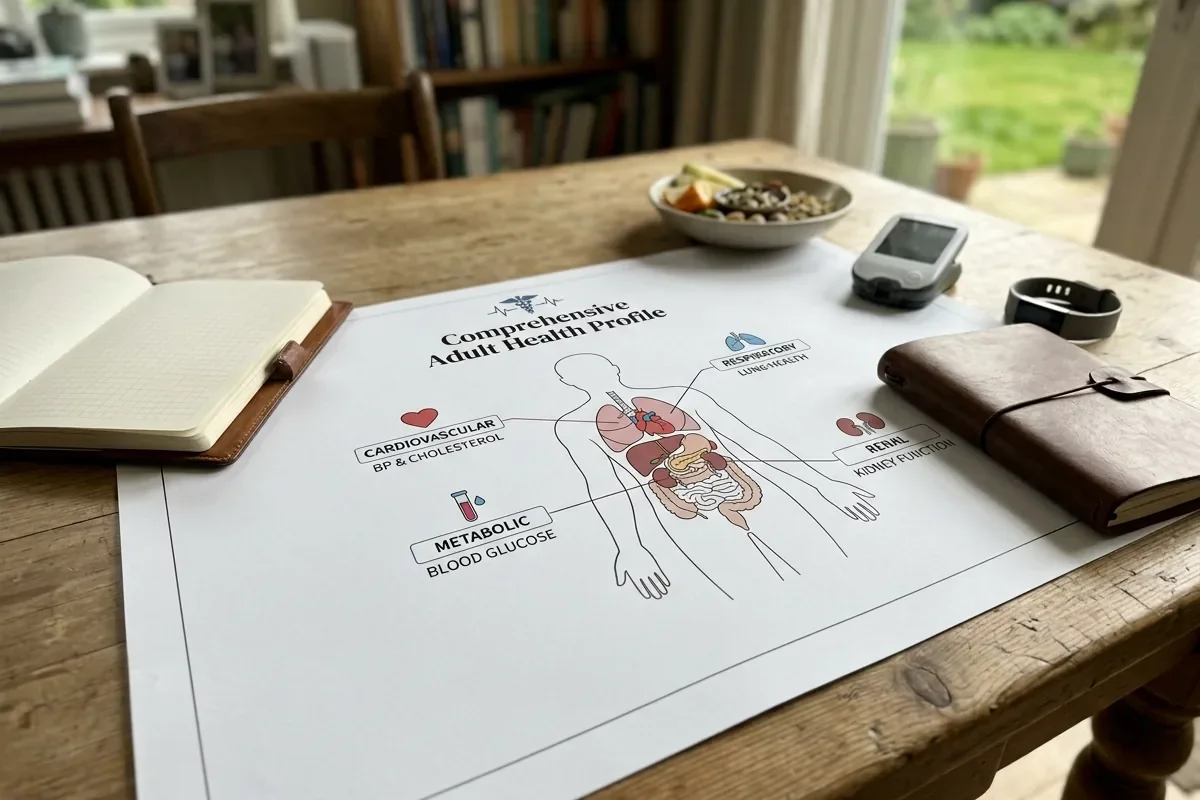
Adult Health Is Connected
Why the whole-picture view matters
Adult health is rarely a single issue. Blood pressure, blood sugar, cholesterol, weight, sleep, medication use, family history, and stress can all interact.
Reading them as one picture is exactly what internal medicine training is built for. That is different from treating each number in isolation.
For adults with more than one concern, continuity with one physician can help patterns become clearer over time.
Adult Internal Medicine
What internists commonly help adults manage
Internal medicine is broad because adult health is broad. A good internist can help connect prevention, symptoms, labs, and chronic conditions into one clear plan.
Prevention and screening
Annual exams, age-appropriate screenings, vaccines, lab trends, cancer screening discussions, and risk review.
Cardiometabolic risk
Blood pressure, cholesterol, prediabetes, diabetes, weight, metabolic syndrome, and heart risk.
Hormonal and metabolic concerns
Thyroid concerns, fatigue, weight changes, blood sugar patterns, vitamin deficiencies, and overlapping symptoms.
Medication review
Reviewing prescriptions, supplements, side effects, interactions, and whether medications still match the current plan.
Complex adult conditions
Multiple chronic conditions, specialist coordination, kidney health, heart risk, and symptoms that need a deeper look.
Lifestyle and risk reduction
Sleep, stress, nutrition, activity, alcohol use, smoking history, family history, and sustainable prevention planning.
The Internal Medicine Visit
What this looks like in a real visit
In a visit with an internist, the goal is to connect the dots. Your physician can compare this year's labs to prior trends, review your medications for interactions, factor in your family history and lifestyle, and decide what should be watched, changed, or tested.
That is the everyday work of internal medicine, and it takes time to do well. It is especially important when symptoms, lab results, medications, and risk factors overlap.
At Palm Beach Concierge Medicine, patients can receive internal medicine for adults within a concierge model designed around more time, access, and continuity.
Board-Certified Internist in Boca Raton
The concierge difference
Palm Beach Concierge Medicine is led by Dr. Abeer Aziz-Siddiqui, DO, a board-certified internist, offering unhurried adult internal medicine as part of concierge primary care.
The small patient panel is what gives whole-picture care room to happen. Your physician has time to review the details, compare trends, ask better questions, and help you understand what your health information means.
You can learn more about Dr. Aziz-Siddiqui or explore concierge primary care in Boca Raton.

External Resources
Helpful resources on internal medicine and board certification
These trusted resources can help patients understand what internists do and what board certification means in adult internal medicine.
What Is an Internist?
ACP guidance on internal medicine physicians, adult care, prevention, diagnosis, treatment, and complex illness.
American Board of Internal MedicineABIM for Patients
Patient-facing information from ABIM on board certification and informed health care decisions.
Frequently Asked Questions
Questions about internists and internal medicine
What is the difference between an internist and a general practitioner?
An internist specializes in adult medicine and is trained in depth for complex, multi-system adult conditions. General or family practitioners often care for patients of all ages.
Should I see an internist or a family medicine doctor?
Both are strong primary care choices. Internists focus on adults and often add depth in adult conditions, while family medicine covers all ages. It depends on your needs.
What does board-certified in internal medicine mean?
It means the physician has met a national standard in adult medicine through the American Board of Internal Medicine.
Do internists handle prevention or just illness?
Both. Internal medicine covers prevention, screening, and the ongoing management of adult conditions, not only treating illness after it appears.
Is internal medicine a good fit for adults with several health concerns?
Yes. Internal medicine is especially useful when several adult health issues overlap, such as blood pressure, cholesterol, diabetes, thyroid concerns, kidney health, medications, and heart risk.
Adult-Focused Internal Medicine
Want a board-certified internist who has time to see your whole picture?
Schedule a free consultation to learn more about concierge internal medicine in Boca Raton.
This article is for general education and is not a substitute for individualized medical advice, diagnosis, or treatment. Coverage, insurance, and tax details can change and vary by plan; confirm specifics with your plan, physician, or a qualified advisor. If you are having a medical emergency, call 911.
