
Do You Need a Primary Care Doctor If You Feel Fine?
Primary Care When Healthy
Feeling healthy is the best time to establish care.
A primary care relationship helps set your baseline, keep screenings on track, and catch quiet changes before they become harder to manage.

If you rarely get sick, it is easy to conclude you do not need a regular doctor. Plenty of healthy people go years without one.
The problem is that the most valuable work in medicine, catching problems early, happens precisely when you feel fine. Here is an honest look at why a primary care relationship matters even for the healthy.
Preventive care is not about looking for problems where none exist. It is about knowing your baseline, staying current on screenings, and having a physician who knows your history before something urgent happens.
Early Detection
Feeling fine is not the same as being fine
Many of the conditions that shape long-term health are silent in their early stages. High blood pressure usually has no symptoms. Prediabetes and high cholesterol can build quietly. Early kidney changes are often invisible.
By the time you feel something, the condition may have been developing for a while. A primary care relationship is how these concerns get caught while there is the most room to act.
That is why preventive health screenings matter even when you feel well. The goal is to notice changes early enough to do something useful.

Usual Source of Care
The value of a usual source of care
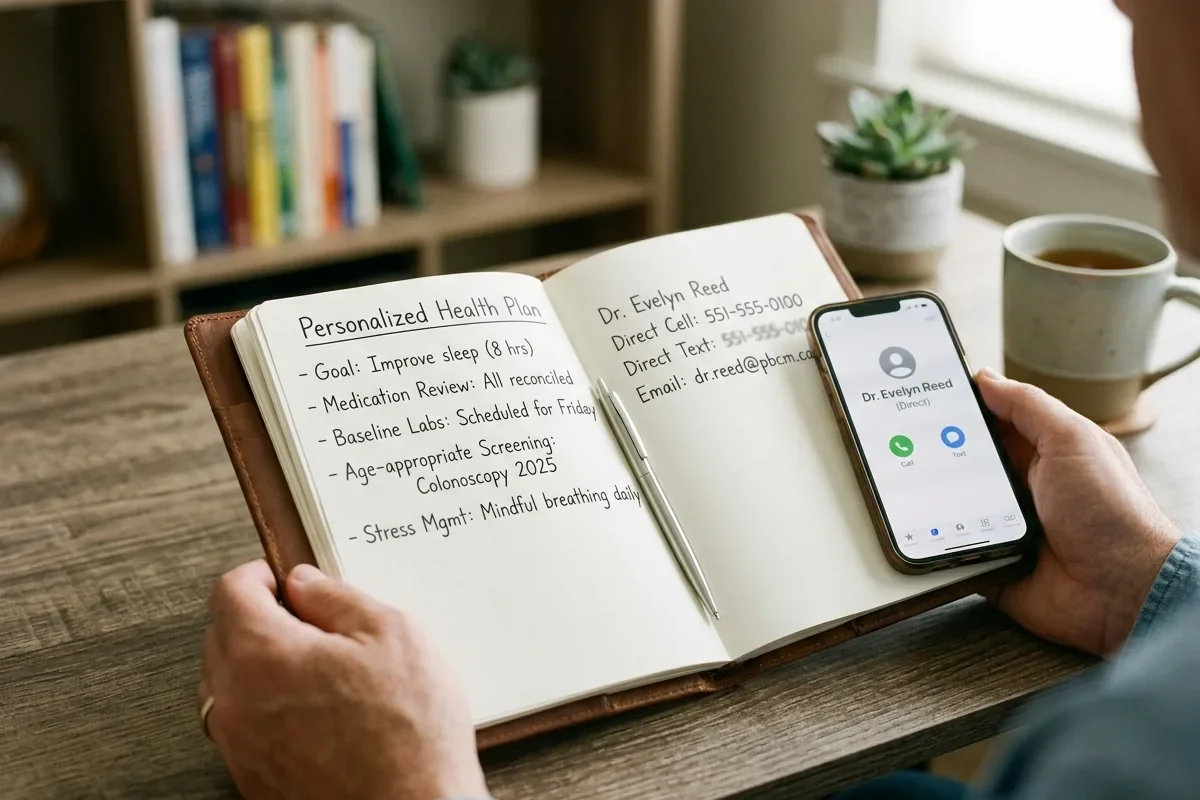
Health research consistently shows that having a usual source of care, one physician or practice you turn to, is associated with more preventive care and better follow-through than having no regular doctor.
MedlinePlus makes a simple point that is easy to overlook: regular visits, even when you feel well, are how prevention actually happens.
A relationship also means someone knows your baseline, so a small change stands out.
Prevention Before Problems
What healthy people gain
A regular doctor is not only for sickness. For healthy adults, primary care creates the foundation for better decisions later.
Baseline numbers
Blood pressure, cholesterol, blood sugar, weight trend, kidney function, and other markers are easier to interpret when your physician knows what is normal for you.
Age-appropriate screening
Screenings should be timed to your age, risk factors, family history, and health goals, not handled as a generic checklist.
A physician who already knows you
When something does come up, you are not starting from zero with someone who has never seen your history or baseline.
Guidance before problems start
Sleep, stress, activity, nutrition, medications, family history, and travel can all be discussed before they become larger concerns.
Preventive Visit
What this looks like in a real visit
For a healthy adult, a first visit is mostly about establishing a baseline: a focused history, the right screening for your age and risk, and a conversation about your goals.
It is not about finding something wrong. It is about knowing where you stand and setting up early detection for the years ahead.
Depending on your age and risk, that may include blood pressure, cholesterol, blood sugar, kidney function, medication review, vaccine review, cancer screening discussions, sleep, stress, family history, and lifestyle goals.
Best Time to Establish Care
Why this matters now
The best time to establish care is when you do not urgently need it. Building the relationship while you feel well means that when you do have a concern, you are talking with someone who knows your history rather than starting from zero with a stranger.
It also gives your physician time to understand your baseline before a symptom, abnormal lab, new medication, or specialist referral changes the picture.
If you are healthy now, that is exactly why prevention has room to work.

Concierge Primary Care in Boca Raton
The concierge difference
A concierge relationship makes prevention practical, because access is easier and your physician has the time to actually know you.
At Palm Beach Concierge Medicine, prevention is not rushed through at the end of a visit. Your physician can review your baseline, discuss family history, time screenings appropriately, and build a plan that fits your real life.
You can explore preventive health screenings, concierge primary care, and executive physicals to learn how this works.
External Resources
Helpful resources on regular checkups and prevention
These trusted resources explain why regular checkups and preventive care matter, even for people who feel healthy.
Preventive Health Care
Guidance on regular health care visits, preventive services, screenings, and staying healthy.
CDCPreventive Care
CDC information on regular checkups, screenings, vaccinations, and preventive care for chronic disease prevention.
CDCHealthy Weight and Growth
CDC guidance on healthy eating, physical activity, sleep, stress reduction, and long-term health.
Frequently Asked Questions
Questions about primary care when you feel healthy
Do I need a primary care doctor if I never get sick?
Yes, ideally. Many serious conditions are silent early on, and a primary care relationship is how they are caught while there is the most room to act.
How often should a healthy adult see a doctor?
It depends on age and risk, but many healthy adults benefit from a regular preventive visit to update screenings and track their baseline. Your physician can set the right interval.
What happens at a checkup if nothing is wrong?
Your physician establishes your baseline, orders age-appropriate screening, reviews your history and goals, and sets up early detection. It is prevention, not problem-hunting.
Is it worth having a doctor before I have any health issues?
Yes. Establishing care while you feel well means someone already knows your history when a concern eventually comes up.
What screenings do healthy adults need?
It depends on your age, sex, family history, risk factors, and prior results. Common discussions may include blood pressure, cholesterol, blood sugar, vaccines, cancer screenings, and lifestyle risk.
Prevention Starts Early
Feeling healthy is the best time to establish care.
Schedule a free consultation to set your baseline with a physician who will actually know you.
This article is for general education and is not a substitute for individualized medical advice, diagnosis, or treatment. Coverage, insurance, and tax details can change and vary by plan; confirm specifics with your plan, physician, or a qualified advisor. If you are having a medical emergency, call 911.
