
Concierge Medicine vs. Direct Primary Care: The Difference
Concierge Medicine vs. Direct Primary Care
Both models offer more access, but insurance is handled differently.
Concierge medicine and direct primary care both aim to create more time with your physician. The key difference is usually how each model handles fees, insurance, and covered medical services.
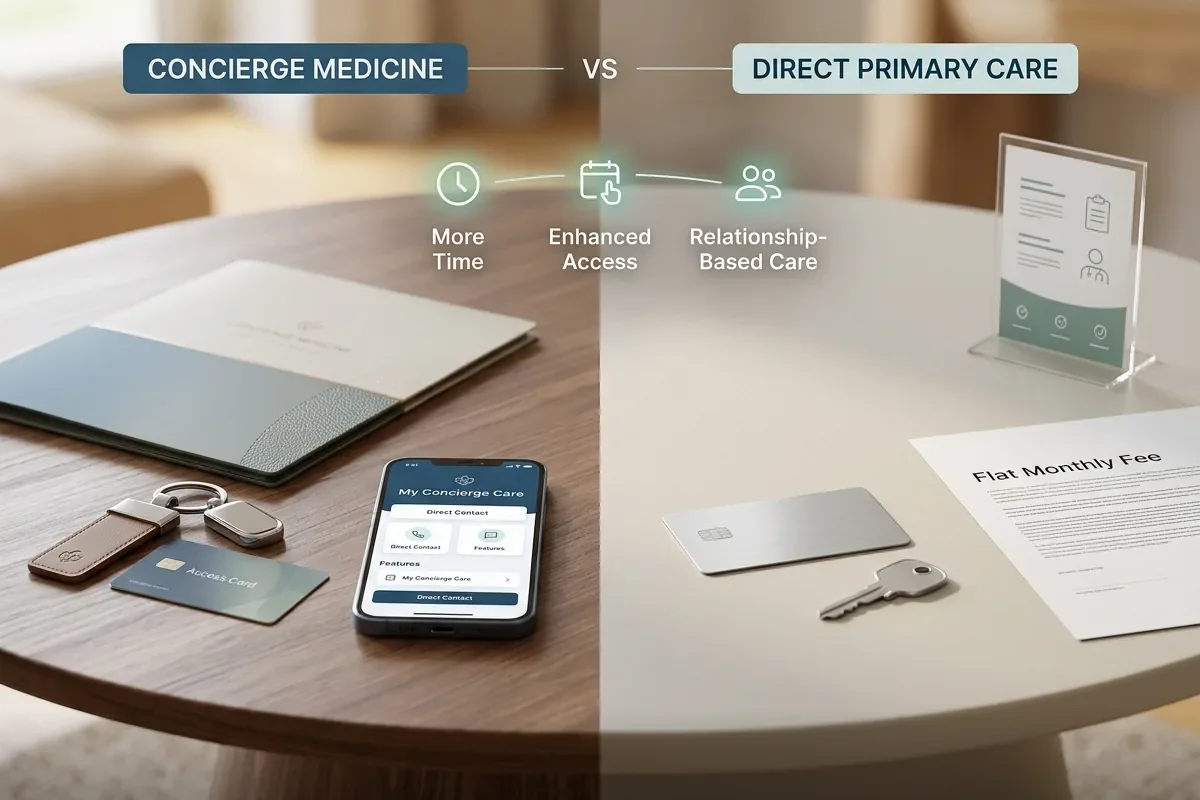
If you have been researching membership-based primary care, you have probably run into two terms that get used interchangeably but are not the same: concierge medicine and direct primary care, or DPC.
They share a goal, which is more time and access, but they are built differently, especially around insurance. Knowing the difference helps you choose the right fit.
The best model is not the same for every patient. The right choice depends on how you want insurance handled, what kind of access you need, and whether you want a relationship-based primary care experience.
Membership-Based Primary Care
The shared idea
Both models replace the rushed, high-volume appointment with something better. Both keep a smaller patient panel so the physician has more time, and both usually offer direct communication and easier access.
If you have felt like a number in traditional care, either model is a step toward a real relationship.
That shared goal is why the terms get confused. But when you look at billing, insurance, scope, and fit, the differences become much clearer.


DPC vs. Concierge
Where they differ: insurance
The clearest difference is how each model handles insurance. Direct primary care typically charges a flat periodic fee and does not bill insurance for primary care services.
Concierge medicine generally charges a membership fee for access and time, while continuing to work alongside your insurance for covered medical services.
In short, DPC often replaces insurance billing for primary care. Concierge care usually works alongside your insurance.
Side-by-Side
Concierge medicine vs. direct primary care
The details vary by practice, but this comparison explains the common differences patients should understand.
Scope and Fit
Where they differ: scope and fit
Both can offer longer visits and better access. The right choice depends on how you want insurance handled and what level of support you need.
Direct primary care
DPC usually charges a lower flat fee and does not bill insurance, which can suit people who want simple, predictable primary care costs.
Concierge care
Concierge care generally charges a membership fee and keeps working with your insurance, which can suit people who want premium access while keeping insurance in place.
The right fit
The best choice depends on your health needs, insurance preferences, access expectations, and whether you want a physician who coordinates the broader picture.
Choosing the Right Model
How to decide
Ask a few questions of any practice you consider. How is insurance handled? What exactly does the fee include? How large is the panel, and how do I reach the physician?
For adults managing ongoing conditions, also ask how the practice coordinates specialists, testing, medications, and follow-up. Clear answers tell you a lot.
- Do I want insurance billing to remain part of my primary care?
- Do I want a lower direct-pay fee for primary care services?
- Do I need help coordinating specialists, labs, imaging, and ongoing conditions?
- How important is direct physician access?
- What does the membership fee include, and what is separate?
The Visit Experience
What this looks like in a real visit
In either model, the visit itself is the point. At our practice, that means time to review your labs, medications, sleep, stress, history, and goals, then decide together what to watch, test, or adjust.
The billing model runs in the background. The relationship is what you feel.
Palm Beach Concierge Medicine is a concierge internal medicine practice in Boca Raton, led by a board-certified internist, that keeps your insurance in place while providing unhurried concierge primary care and direct access.

Frequently Asked Questions
Questions about concierge medicine and direct primary care
Is concierge medicine the same as direct primary care?
No. Both use a membership and a smaller panel, but DPC typically does not bill insurance, while concierge care generally works alongside your insurance for covered services.
Which is cheaper, DPC or concierge?
DPC often charges a lower flat fee and does not bill insurance. Concierge fees vary and the model keeps working with your insurance. Compare total value, not just the fee.
Do I keep my insurance with concierge care?
Yes. Concierge care works alongside your insurance, which still covers labs, imaging, specialists, hospital care, prescriptions, and other covered services.
Which model is better for managing chronic conditions?
Either can work well. What matters most is time, access, continuity, and how the practice coordinates specialists and testing. Ask each practice directly.
How do I choose between the two?
Ask how insurance is handled, what the fee includes, how you reach the physician, how much access you get, and whether the practice can coordinate testing, referrals, and ongoing conditions.
Compare Your Options
Not sure whether concierge care or another model fits you best?
Schedule a free consultation and we will explain the differences honestly.
This article is for general education and is not a substitute for individualized medical advice, diagnosis, or treatment. Coverage, insurance, and tax details can change and vary by plan; confirm specifics with your plan, physician, or a qualified advisor. If you are having a medical emergency, call 911.
